Eclipsing Variables
Eclipsing Variables (e)
Eclipsing variables are binary star systems where the orbital plane is aligned nearly along the observer's line of sight. The binary components pass in front of one another from the observer's perspective and so their combined brightness decreases periodically.
Classification and numbers
- Supertypes
- variable
- periodic
- Subtypes
- EA (detached)
- EB (semi-detached)
- EW (overcontact / W UMa)
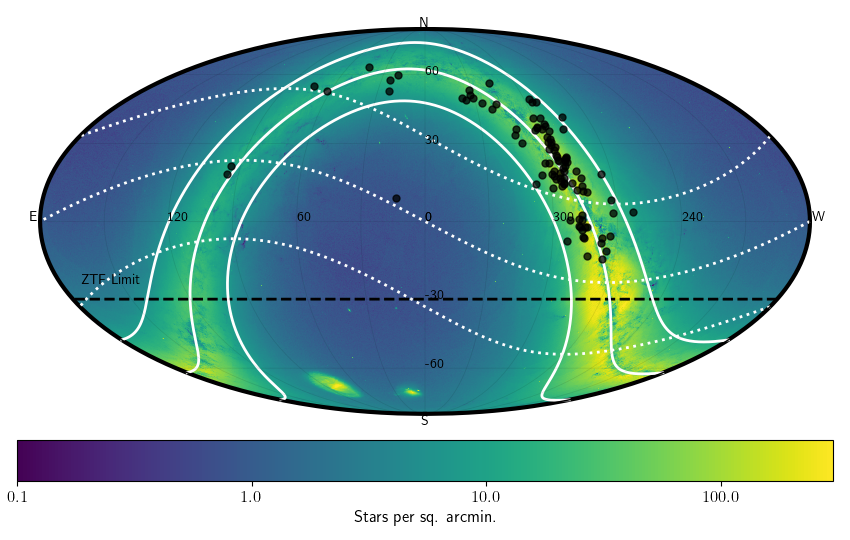
- Occurrence rate: very common, about 106 expected in ZTF data
ZTF light curves
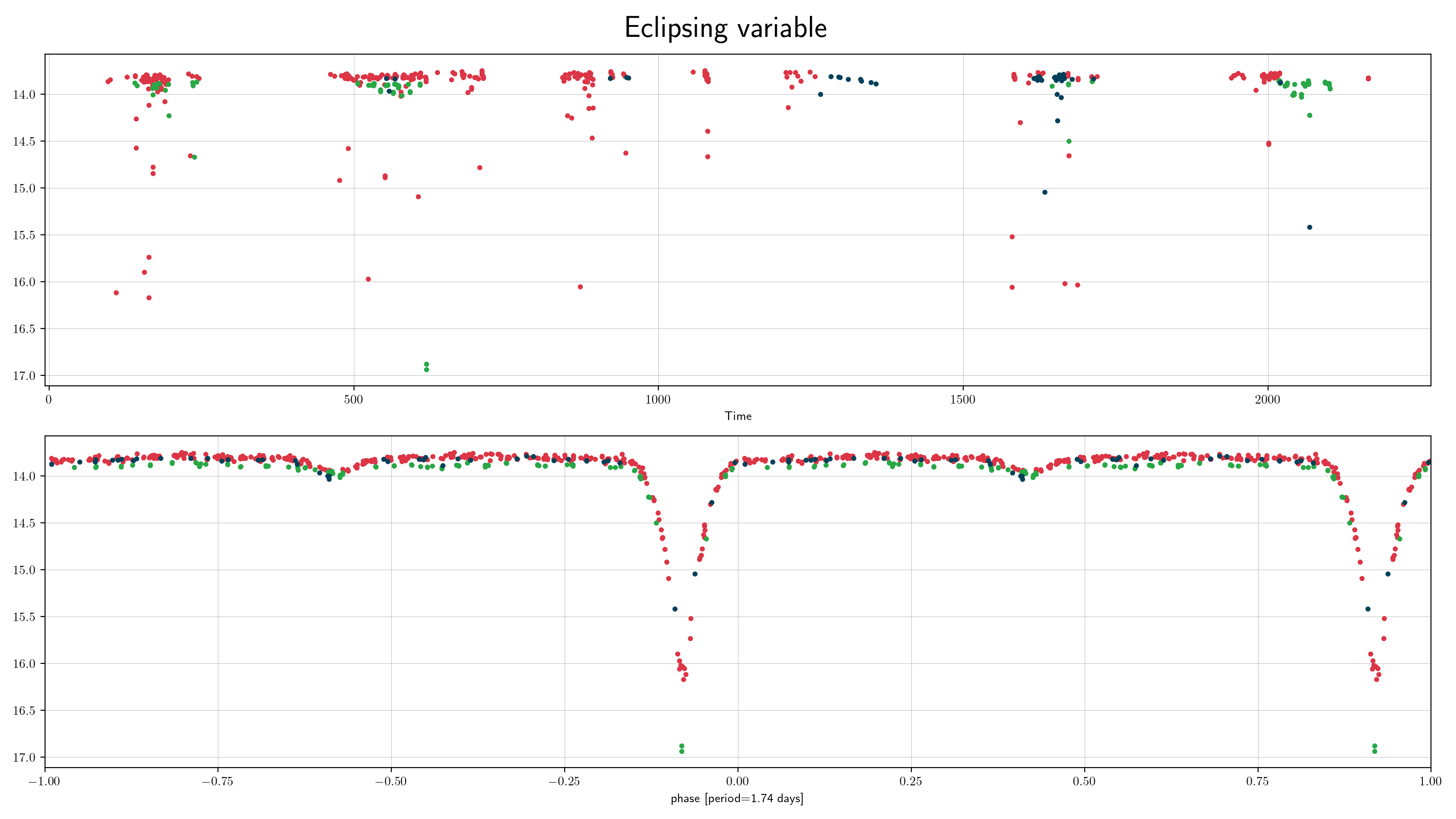
Description
Eclipsing binaries show regular, periodic "V-shape" dips in their phase-folded light curves, which may be sharp or rounded depending on the system. EA-type systems have well-separated eclipses with flat out-of-eclipse portions. EB-type systems show continuously varying light curves. EW-type (W UMa) systems have nearly equal depth eclipses and are sinusoidal-like due to the shared envelope.
Light curve characteristics
- periodic variable
- period range: minutes to years
- amplitude: ~0.1 to several magnitudes
- light curve shape:
- sharp V-shaped dips (EA)
- continuously varying with unequal minima (EB)
- nearly sinusoidal with equal-depth minima (EW)
Other characteristics and selection methods
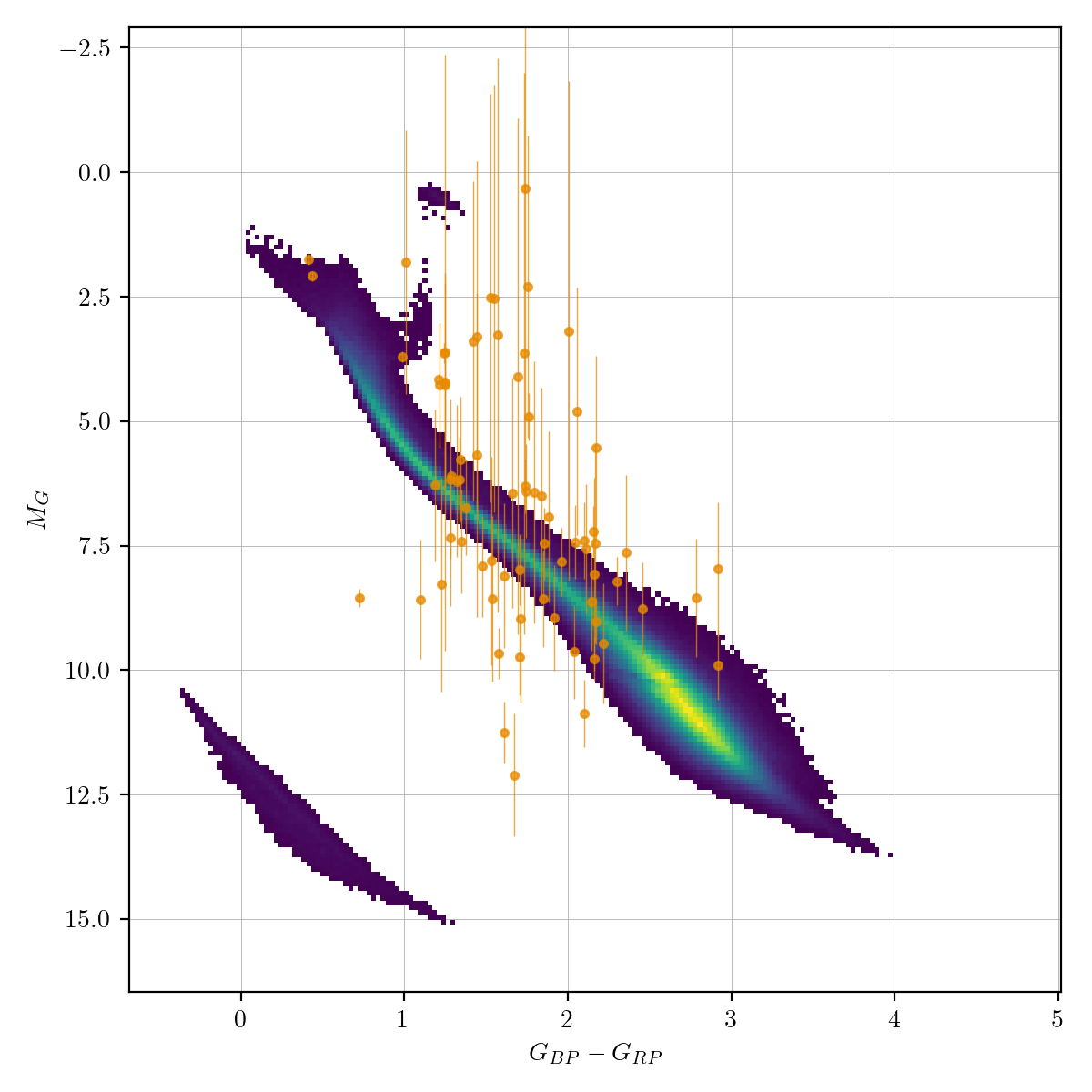
- eclipsing binaries span a wide range of spectral types
- period and light curve shape are the primary classification criteria
- color information can help distinguish from pulsators at similar periods
References and further reading:
- VSX: https://www.aavso.org/vsx/index.php?view=about.vartypes
- Sterken & Jasschek: Light curves of variable stars